.png)
The Secret Radiance of the Daffodil Orchid
In Sri Lanka’s high, wet grasslands, there is an orchid that blooms as if sunlight has briefly decided to take botanical form.
When it flowers, it can look almost improbably theatrical: a tall stem, one or two golden blooms, and suddenly the green sweep of patana grassland has its own small trumpet fanfare.
For most of the year, though, the plant all but disappears. It lives quietly among the grasses, hard to detect, easy to miss and oddly dependent on that fact.
This is part of its beauty, and part of its trouble.
We are used to telling conservation stories about the spectacular and the famous: the panda, the elephant, the forest that appears on postcards and funding appeals. But this orchid belongs to a different category of wonder. It is not an animal with an expressive face. It does not roar, migrate or trend. It blooms briefly, vanishes efficiently and asks from us a rarer form of love: attention without possession.

It is called the Daffodil Orchid, Ipsea speciosa, because its bright yellow, trumpet-like blooms mirror its namesake. As a striking endemic of Sri Lanka closely associated with the Central Highlands, its brief appearance is both a fleeting marvel and a sudden gift.
In a human context, we would probably call that terrible outreach and admirable boundaries.
That may be precisely the kind of attention modern conservation benefits from.
Why This Matters
The Daffodil Orchid is found only in Sri Lanka. Not globally in scattered outposts. Not broadly across South Asia. One island, one set of highland grasslands, one very specific arrangement of altitude, moisture, soil and season. Yet this exact precision makes it fragile, a quiet casualty of disappearing wildlands. This golden high-altitude treasure is officially classified as Endangered on the National Red List 2012 of Sri Lanka.
Endemism is often described in grand language, but at heart it means something simple: this species belongs particularly, intimately, to one place. If it disappears there, it disappears everywhere.
And its world is smaller than it looks.
Field research published in 2020 documented nine isolated populations on the western slopes of Sri Lanka’s Central Highlands, all in unprotected areas. At those sites, the number of flowering plants recorded ranged from just 2 to 23. These are not numbers that need melodrama. They are persuasive on their own. A plant can be beautiful and precarious at the same time.
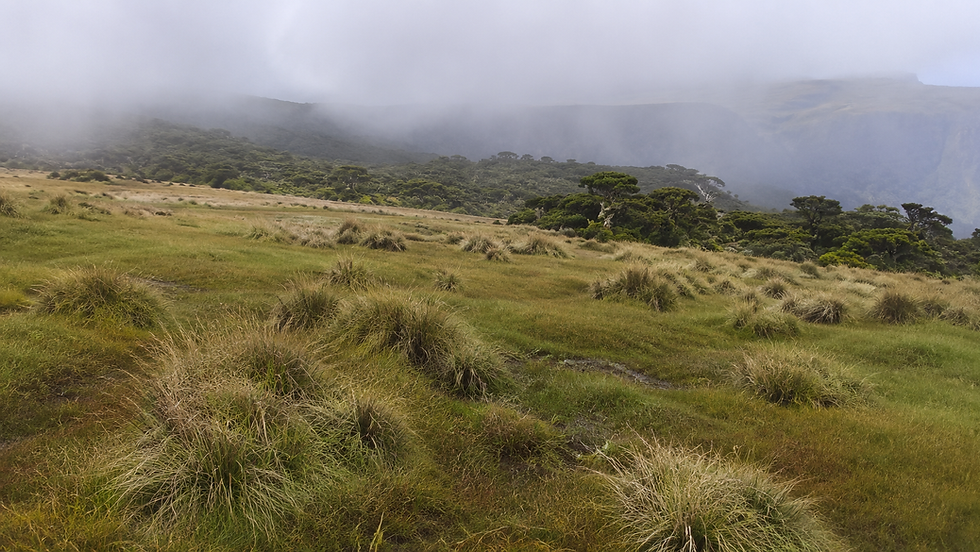
Its habitat, too, is easy to underestimate. Wet montane grasslands are not ecological leftovers waiting to become ‘better’ landscapes. They are not failed forests. They are living systems in their own right, with their own communities, rhythms and specialists. The Daffodil Orchid is one of those specialists. It is not merely growing in the grasslands. It is closely shaped by them.
When those grasslands are altered, the orchid pays the price.
The Challenge
Research has identified several pressures associated with its decline: grassland being altered or replaced as timber plantations spread, intentional burning, invasive plants and wild collection. None of these threats requires a cartoon villain. That is what makes them so instructive. Conservation damage is often committed not by malice alone, but also by habit, oversight, policy gaps and the human talent for assuming that what seems common in a landscape must therefore be safe.
This orchid exposes another problem too: you cannot easily protect what you rarely see.
Outside its flowering season, the Daffodil Orchid is difficult to detect among grasses, the kind of plant a walker could step past with full sincerity and absolutely no idea they had just ignored something extraordinary.
Sri Lankan literature places its blooming roughly between September and February, and during flowering it does not bear leaves. Even at its most conspicuous, it is not exactly meeting conservation halfway. It is, in other words, not running a strong campaign for visibility. Miss the season, miss the plant. Miss the plant, and it can be mistaken for absence. In conservation, invisibility is not the same as security. Sometimes it is the first step towards neglect.
And yet this is not only a story of loss.
Who’s Doing Something About It
The encouraging part of this story is that the orchid has not remained invisible to everyone.
Conservation here is not one person discovering one flower and saving the day. It is a network of attention. Field researchers document occurrences. Botanists interpret specimens and taxonomy. Institutions hold records. Conservation agencies manage legal and habitat frameworks. Communicators help the public understand why a species that appears only briefly can still deserve sustained care.
That distributed structure matters because rare plants are helped most when the work does not stop after one good season. One survey helps, but repeated surveys help more. One specimen record matters, but so do herbarium collections that archive pressed, dried plants for scientific study, Red List processes, habitat management, legal protection and public discretion. The work is cumulative.
Quiet species tend to survive through quiet systems.
The People Already Helping
Among the people contributing to public understanding of the Daffodil Orchid are field researchers such as Jeevan Dananjaya Kottawa-Arachchi, whose work has helped document populations in unprotected highland areas. The value of that contribution is practical. When a species is recorded carefully, concern becomes evidence, and evidence is easier for institutions to act on.
Taxonomists and conservation botanists, including authors such as Siril Wijesundara in the Sri Lanka orchid literature, contribute through a different but connected pathway: the slower work of making sure the right flower is being named, compared and understood before enthusiasm runs off with the wrong plant entirely.
That kind of work can seem distant from public storytelling, but without it, conservation language becomes vague very quickly. Latin can give an impression of brisk certainty, but someone still has to make sure we are admiring the right flower.
Others across Sri Lanka’s orchid and biodiversity institutions contribute through identification, records, assessment, conservation communication and the exchange of field knowledge. This is a relationship between science and the public rather than a one-way process. Professional knowledge and public culture influence each other.
The Systems That Quiet Work Runs Through
Rare species do not persist through goodwill alone. They persist through systems.
Sri Lanka’s conservation architecture includes institutions such as the Department of Wildlife Conservation, the Department of National Botanic Gardens and its Orchid Section, and the National Herbarium. Each plays a different role in protection, research, records and conservation support. One supports protected landscapes and legal protection frameworks, because a species outside protection is often left exposed to sustained human pressure. Another supports botanical expertise, including orchid conservation functions, because knowing an orchid is rare is more useful when someone also knows what to do next. Another preserves the record that allows species identity and distribution to be tracked across time, a quiet but essential part of evidence-based conservation.
There is also legal infrastructure, including the Fauna and Flora Protection Ordinance, which provides a legal framework for protection.
Much of this work is low-visibility. Most of it will never become a film montage. But conservation is often less a heroic leap than a chain of repeated acts: surveying, identifying, documenting, withholding locations, enforcing rules, managing land, checking again.
Quiet work saves quiet species.
What You Can Do
If you want to help, it does not need to begin with something grand.
Easy
Learn the name: Ipsea speciosa.
Names are not magic, but they make attention more precise.
Give the ‘Daffodil Orchid’ a place in your vocabulary this week, and share this story with someone else to help them appreciate the quiet fanfare of the patanas.
Practical
If you photograph orchids or other rare plants, avoid sharing exact wild locations online. A beautiful post can also function as a map, which is excellent for brunch and less excellent for a rare orchid.
If you hike, photograph or work in montane grasslands, stay on established paths where possible and avoid disturbing small flowering plants or the ground around them.
It is a quiet discipline, but once you know what is waiting just beneath the surface, you will never look at bare mountain grasslands the same way again. By treading lightly and encouraging others to see these open spaces not as empty land, but as delicate, living stages, we can ensure the patanas keep their secret radiance.
Deeper
Do not buy, collect or transplant wild native orchids, and avoid purchasing orchids of uncertain wild origin. Support verified Sri Lankan researchers, conservation institutions and habitat protection efforts when you are in a position to do so.
None of these actions require perfection. They are simply ways of making admiration less risky for the species being admired.
Your One Move
If you remember only one thing, make it this:
Do not share the exact location of a rare wild orchid.
We are currently working to compile a list of reliable, accurate contact details that the public can use to share locations safely with researchers and conservationists. If you have a trusted contact or know someone working in this field, please reach out to us (experts.srilanka@theplayn.com) so we can verify and share their info.
Why This Matters, and When You Might Use It
You may not encounter the Daffodil Orchid often. Most people will not. That is normal.
But the behaviour still matters because information travels farther than footsteps now. A plant seen by one careful walker can quickly become visible to thousands of curious strangers if its location is posted too precisely. Most of that curiosity is not malicious. That is exactly why discretion matters. Harm does not need bad intent to become real.
You might use this action when
posting a nature photograph
spotting a friend or fellow enthusiast posting rare-plant photos online
guiding a walk
writing about wild orchids online
Think of it less as secrecy and more as basic habitat manners. A rare flower’s safest camouflage, sometimes, is a vague caption.
Final Thought
Some forms of care are visible. Others are more like good fieldwork, good record-keeping or the decision not to press ‘post’ with one detail too many.
The Daffodil Orchid survives, in part, through that second kind of care.
A flower appears briefly in the grasslands, bright enough to catch the eye and quiet enough to depend on restraint. For a moment, the hillside can seem to have misplaced a small piece of morning. Around it stands a larger human arrangement of researchers, institutions, walkers, photographers and local knowledge, each potentially doing a small part so that the bloom can return without first having to become famous, merchandised and mildly misunderstood.
Not every act of protection looks dramatic enough to satisfy the human appetite for visible effort.
Sometimes it looks like knowing when to leave wonder where you found it.
For Advocates:
If you already care about orchids, grasslands or Sri Lankan biodiversity, you can help by sharing this idea with the kind of care that protects the species, not just the image.
For New Readers:
If you are new to this world, you are still welcome here. You do not need specialist knowledge to become the sort of person who treats a rare species with patience, discretion and respect.
What We Still Need To Know
This story is clearer than it once was, but it is not complete. Useful questions remain:
Science
How variable is flowering from year to year across sites?
What pollinators or reproductive limits may influence long-term persistence?
Habitat
Which grassland conditions most strongly predict survival?
How do fire regimes, invasive plants and surrounding land use interact at site level?
Policy
Since these fragile populations exist largely on unprotected lands, what practical land-management strategies can defend these isolated populations from encroaching agriculture, invasive species and seasonal fires?
How effectively are existing legal tools being implemented for rare-plant conservation?
Culture and Communication
How can people celebrate rare wildflowers without increasing collection risk?
What public messaging best supports protective discretion?
Technology and Data
Can monitoring improve through better mapping, seasonal surveys or community reporting systems that protect sensitive locations?
What data-sharing standards best balance research access with species safety?
Ethics
When does visibility help a species, and when does it expose it?
How should conservation decide what to publicise and what to withhold?
For now, one thing seems clear enough.
A bright yellow orchid is still blooming in Sri Lanka’s highlands.
That is not just a lovely detail.
It is an ongoing responsibility.
Version 2 – Whom we want to hear from next
Know an expert we should be speaking to? Invite them – click here.
If you’re that expert, click here or reach out to experts.srilanka@theplayn.com.
We’re building an open database of conservation experts and organisations – your insight can directly shape Version 2.
And if you’re a photographer (or know one) with photos you’re willing to share for public education, click here – or pass them on. Your images will help thousands learn.


Comments